Spring Break in Peru: A Journey Beyond the Expected
Spring break doesn’t have to be predictable, but it can be unforgettable.
For families who value culture, connection, and meaningful shared experiences, Peru offers something far richer than a typical vacation. It offers immersion, thoughtfully designed days where history, gastronomy, biodiversity, and community come together.
This journey was created for travelers who weren’t simply looking for an off-the-shelf package. But this trip was created for families that were looking for depth. For access. For experiences not found in guidebooks.
For families who want their time away to mean something.
Here’s what that kind of spring break in Peru can look like.
Lima: A (fun) Beginning Rooted in Culture
Your journey begins in Lima, staying in Barranco or Miraflores, coastal neighborhoods that balance artistic energy, ocean views, and refined gastronomy.
A privately guided exploration through Lima’s historic center reveals colonial plazas and layered architecture, while a visit to the Larco Museum introduces Peru’s ancient civilizations through beautifully curated artifacts that captivate both adults and children.
But what makes Lima especially meaningful is how culture is experienced, not just observed.
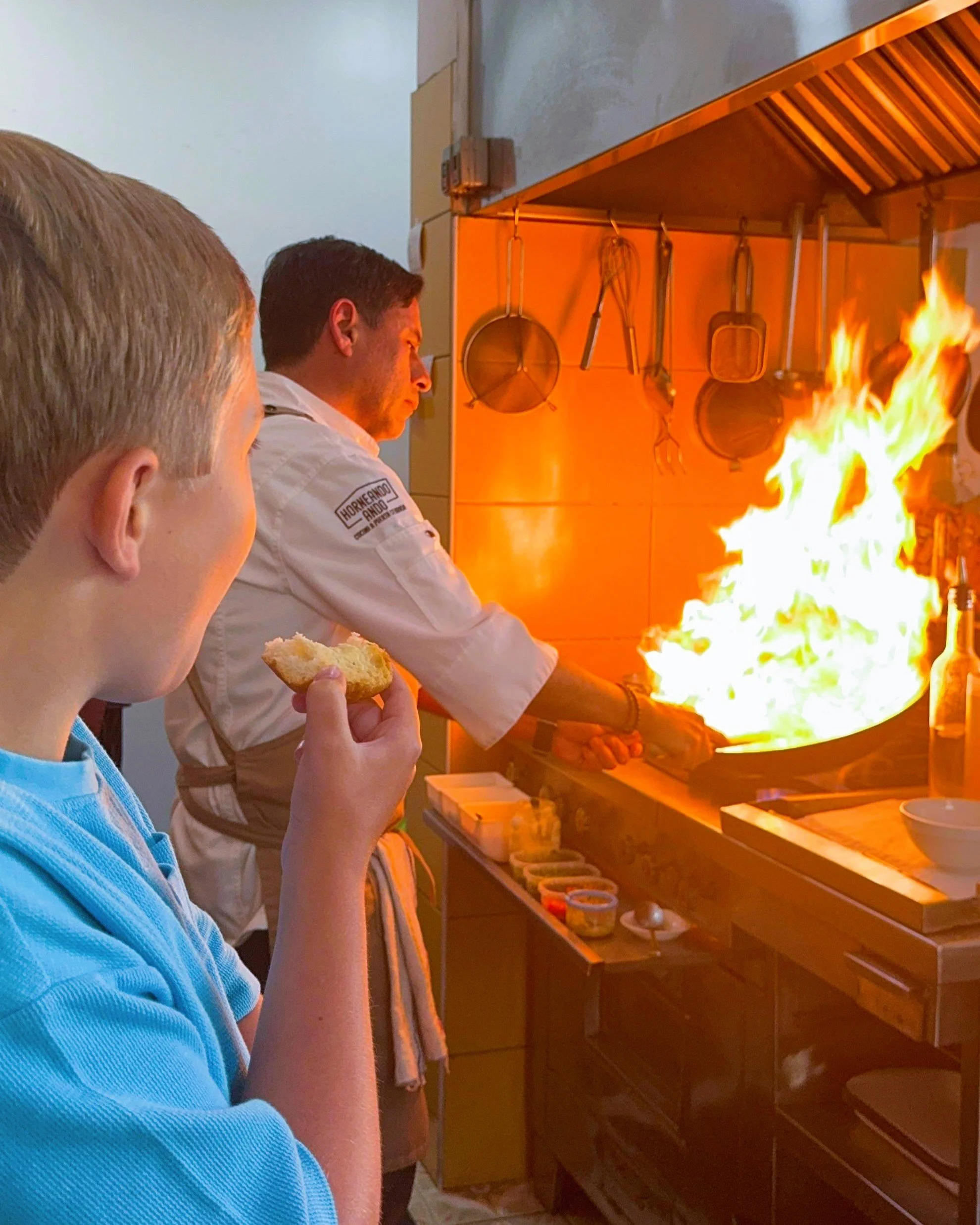
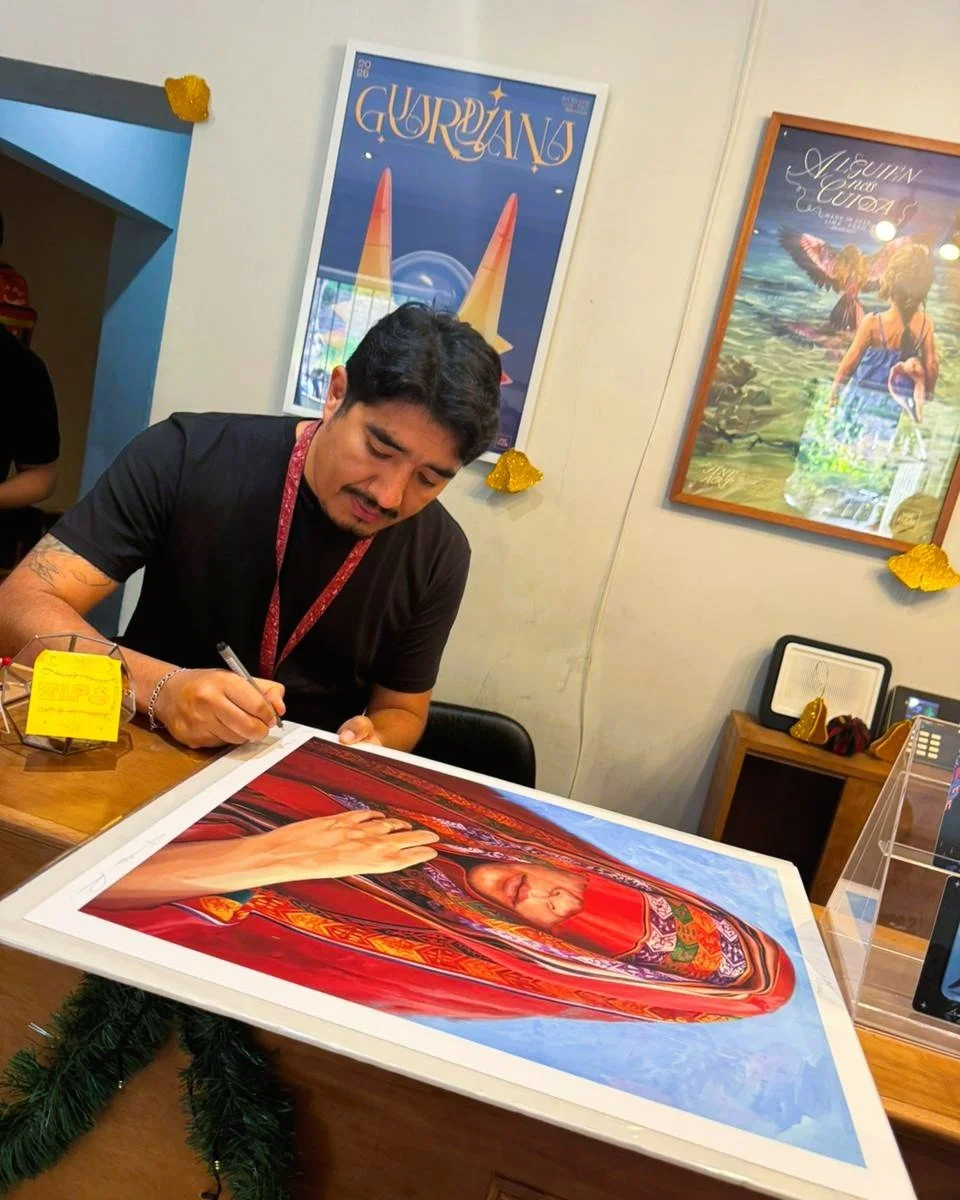
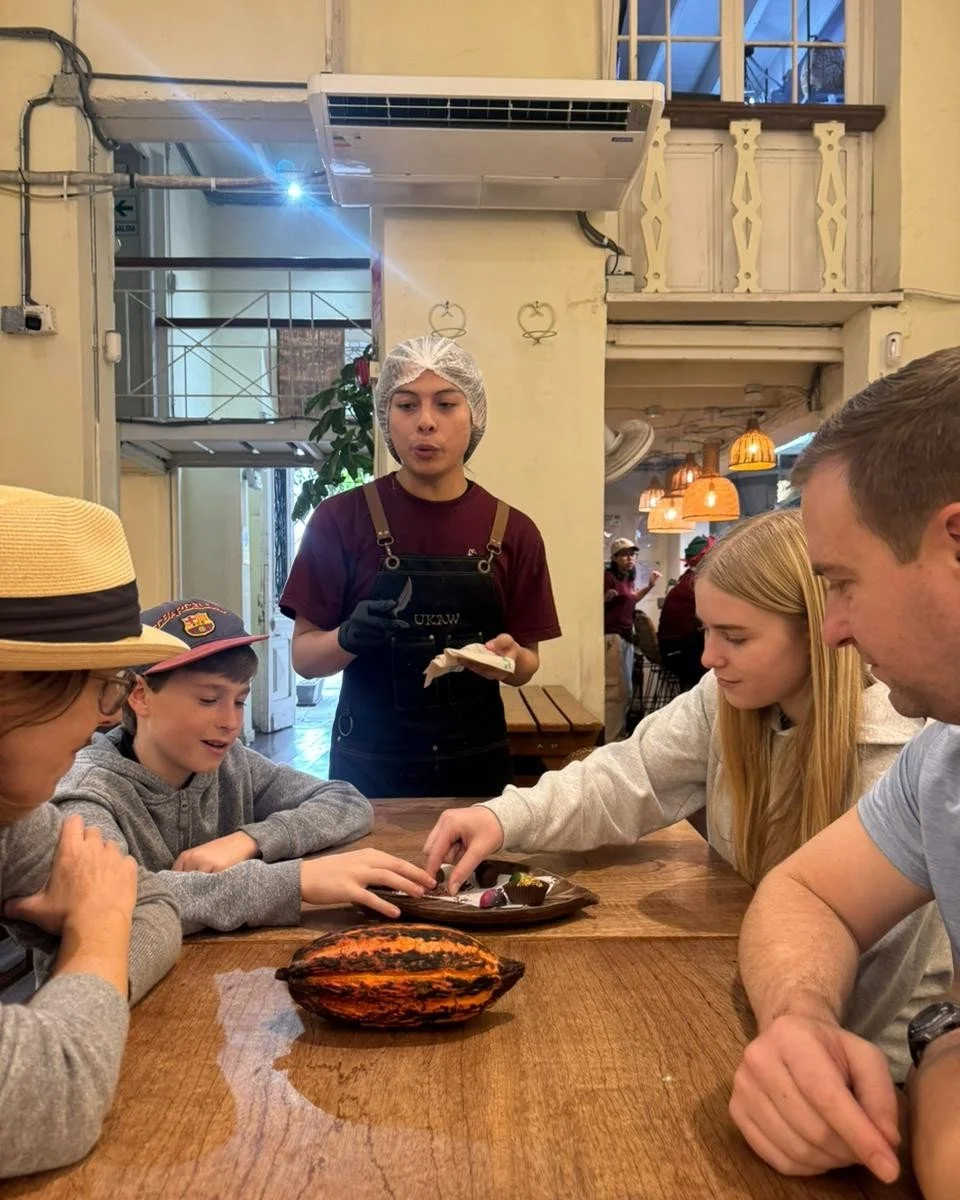
You might explore a local market with a chef, taste native fruits you’ve never encountered before, and begin to understand Peru’s biodiversity through flavor. Spring break starts not with distraction, but with perspective, and, of course, flavors.
The Sacred Valley: Walking Through a Living Civilization
After flying to Cusco, you descend into the Sacred Valley, staying among wide-open landscapes and traditional villages. This is intentional, allowing for gentle acclimatization and a slower rhythm from the start.
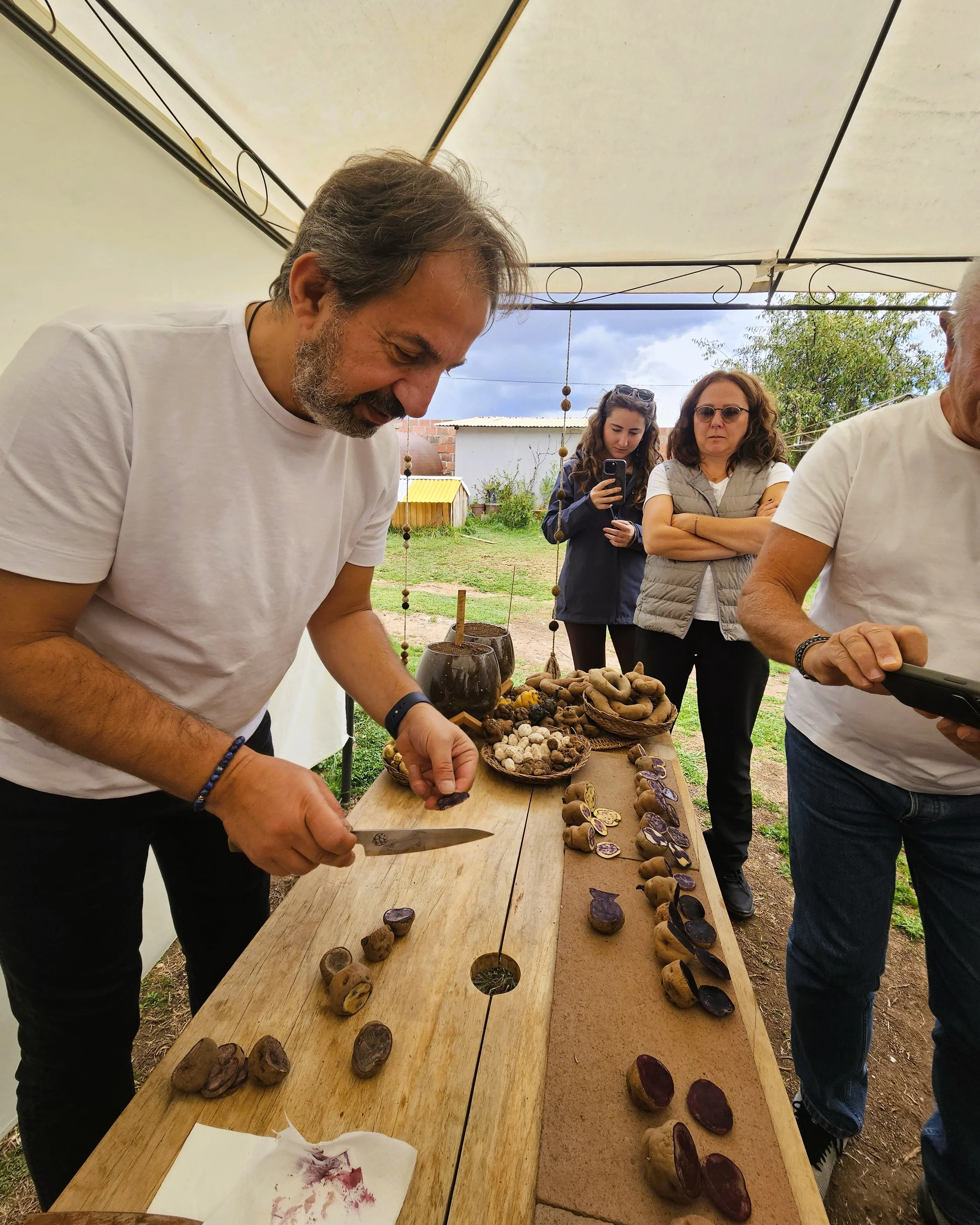
Visit to the tuber and potato laboratory with Manuel Choque, a passionate guardian of Peru’s agricultural heritage, or the Potato whisperer, as some people call him. Surrounded by hundreds of native potato varieties, learn how he preserves biodiversity that has existed for thousands of years and how it is evolving.
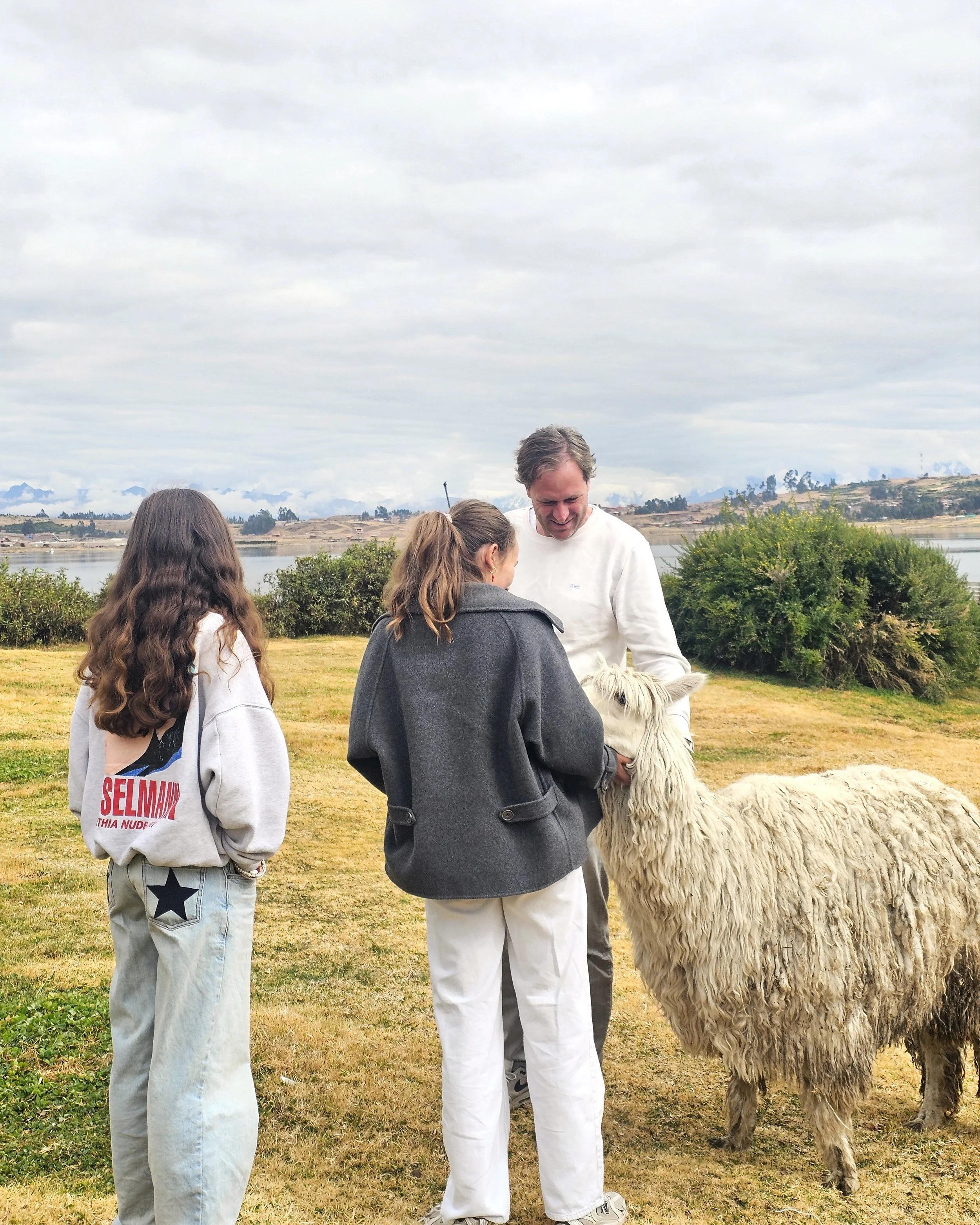
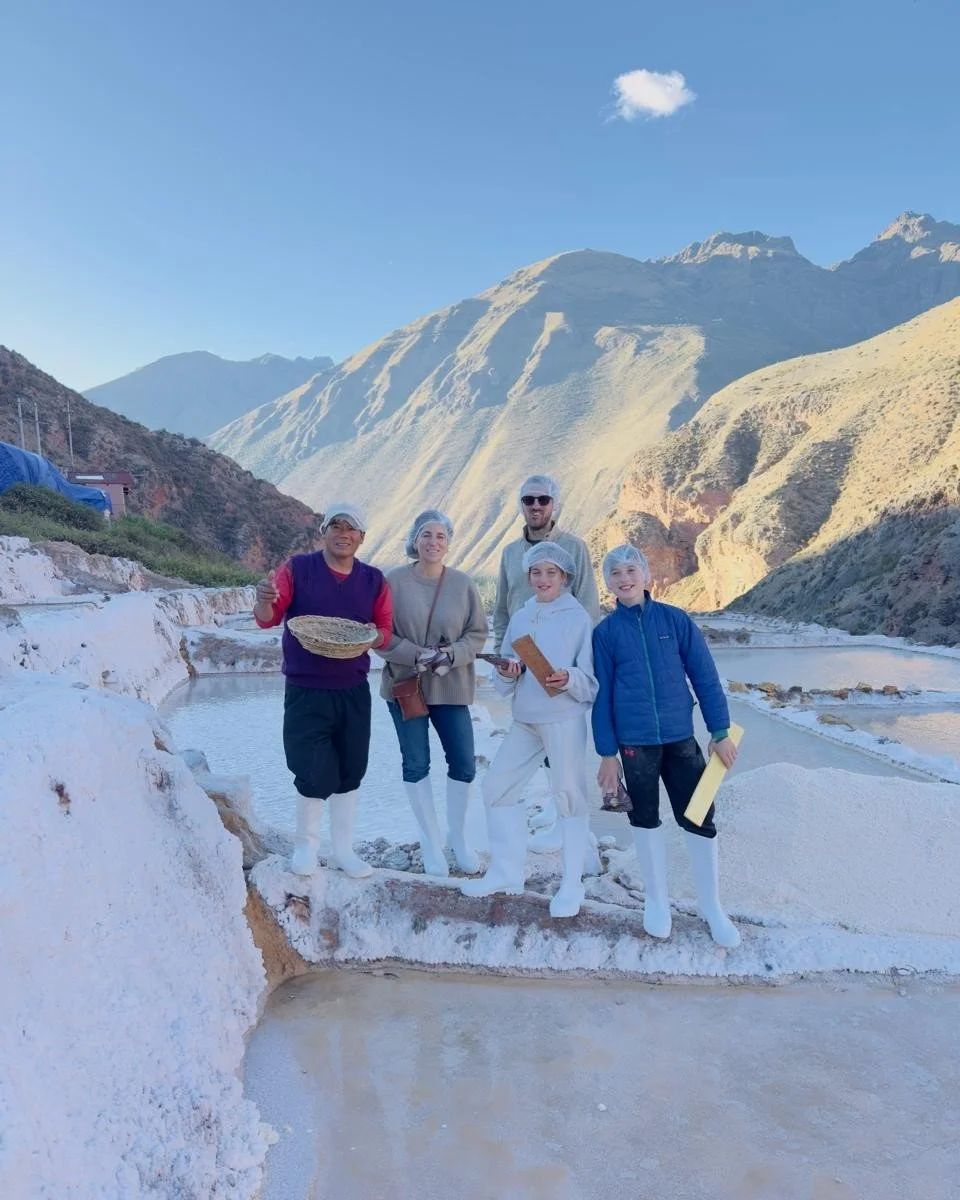
Nearby, you explore Sacred Valley’s most iconic sites as Moray’s circular agricultural terraces and the salt pools of Maras, gaining insight into Inca engineering and sustainable practices that still influence life today.
A scenic lunch at Tiobamba becomes a moment to pause. Surrounded by mountain views and farmland, this is where the experience shifts from exploration to presence.
And beyond the monumental landscapes, Peru reveals its quieter wonders. A visit to a hummingbird sanctuary introduces families to the extraordinary biodiversity of the Andes and cloud forest. Watching these iridescent birds hover mid-air becomes unexpectedly mesmerizing, a reminder that Peru’s magic lies not only in its grand ruins but in its delicate ecosystems.
Machu Picchu: A Shared Moment of Wonder
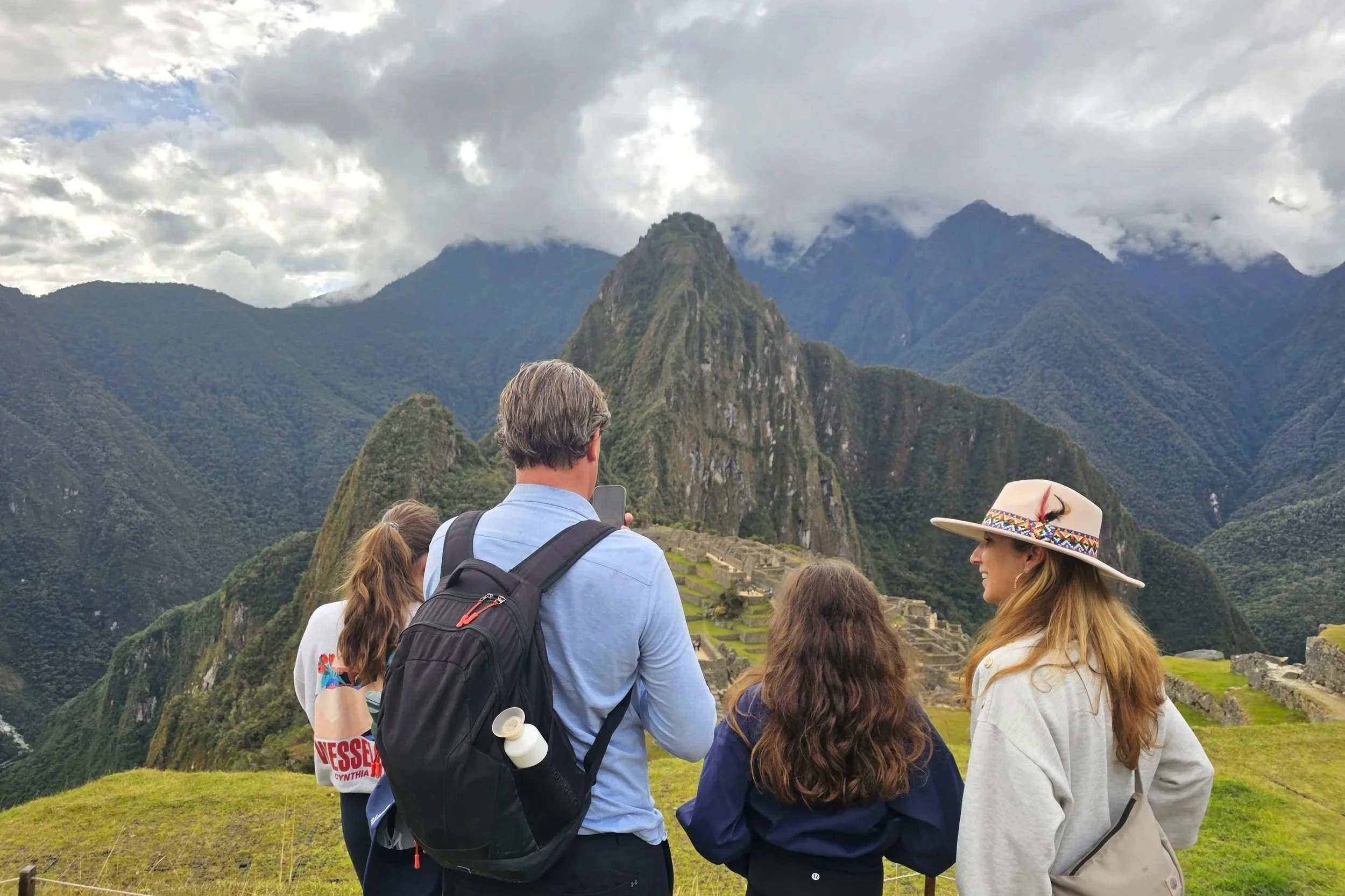
The journey to Machu Picchu unfolds gradually.
A scenic train ride through the narrowing valley builds anticipation before you arrive early at the citadel. With a private guide, Machu Picchu transforms from an iconic postcard into a living story of astronomy, architecture, and sacred geography.
The terraces appear first, green steps carved into the mountain, impossibly precise, holding the ridge in place. Then, staircases, temples, corridors, open plazas framed by sharp Andean peaks. Machu Picchu isn’t a single viewpoint. It’s a network of neighborhoods, ceremonial spaces, agricultural terraces, and quiet corners where stone meets sky.
You move through narrow passageways worn smooth by centuries. You climb original Inca steps, feeling their uneven edges under your feet. Llamas wander freely across the terraces, indifferent to the global fame of the place.
It becomes less about “seeing it” and more about feeling it.
Cusco: Where History Layers Itself
In Cusco’s historic center, cobblestone streets and Inca foundations reveal a city built in layers.
To close the journey, a private cooking class with Seledonia, our personal friend and of the best local chefs in Cusco, becomes both celebratory and intimate. Together, you prepare traditional Peruvian dishes, learning not only techniques but the stories behind ingredients.
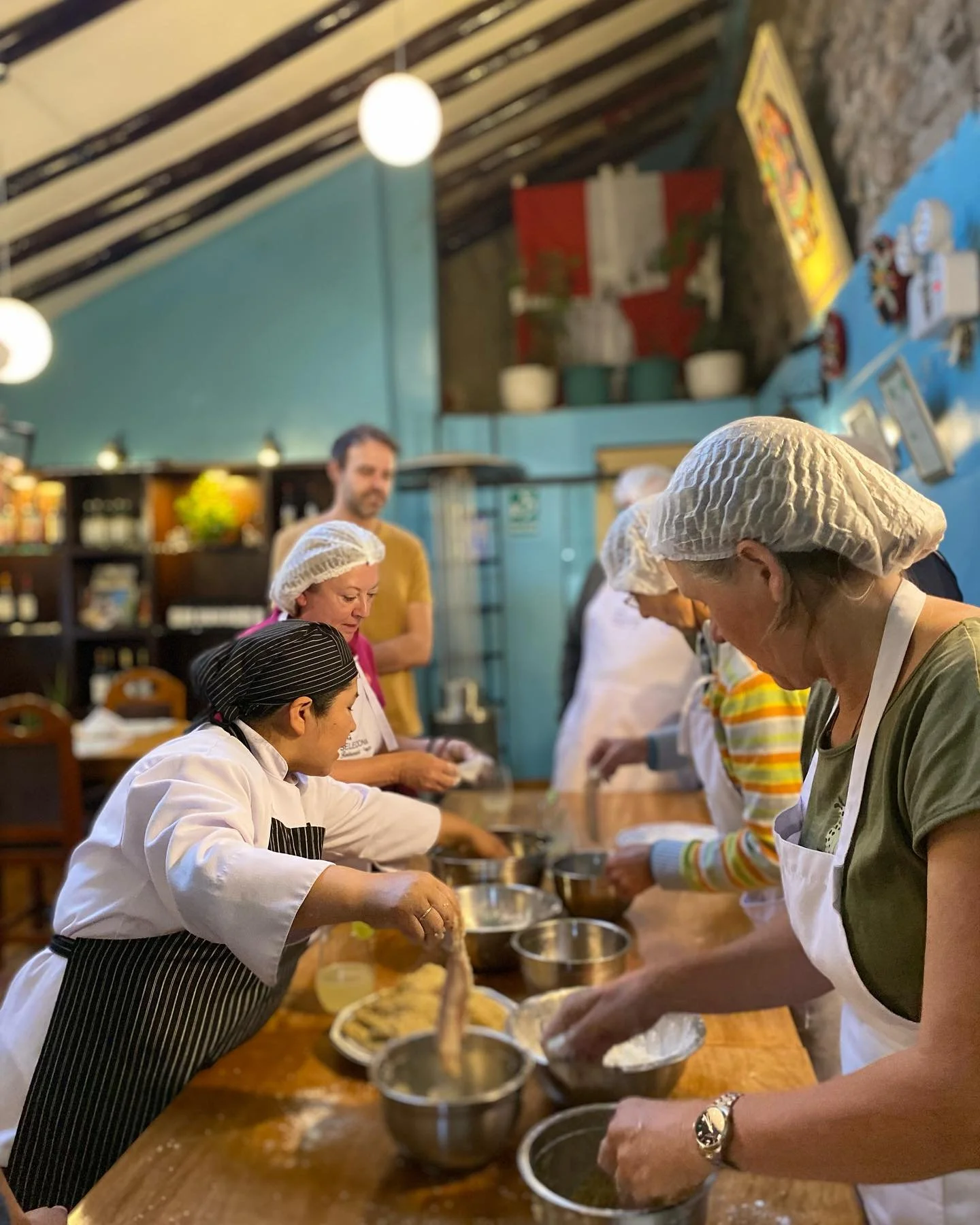

Food becomes memory. Shared memories of a family exploring together.
Families won’t remember flight times or hotel details years from now.
They’ll remember standing together above the terraces of Machu Picchu.
Learning about native potatoes high in the Andes.
Cooking side by side in Cusco, tasting something they made together.
That kind of spring break doesn’t happen by chance. It’s designed with intention.
If Peru is on your mind for your next school break, tell us what you want this journey to feel like, your pace, your priorities, your children’s curiosities.
Start the conversation through our planning form, and let’s begin shaping something meaningful together.